Normal
0
false
false
false
EN-US
JA
X-NONE
Excellency Pedro Monzon, Ambassador of the Republic of Cuba to the Commonwealth
of Australia
Pedro: It is I, Sudha, hijo de Lucia. Soy yo, Sudha, hijo de Lucia
from the Omaha Indian Reservation saw this on his or her Language List serve
and since it involved the two countries I call home, they forwarded it to me.
me proud of our Little Island. I know that they also have helped Maori become
literate in NZ. A little ashamed that Australian Gov. did not do it for the
past many years but at least they did not refuse Cuban Assistance.
good to hear news about you. I will send this on to mother Lucia
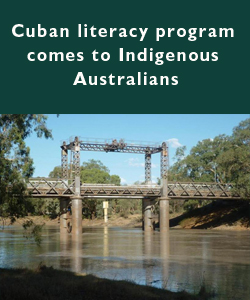
Cuba, Sept 3. – A second group of Aboriginal Australians learned to read and
write in their own language with the Cuban literacy method Yes, I can, in the
town of Wilcannia, in New South Wales, the same state where Canberra, the
capital, is located.
The graduation ceremony gathered about 80
people, among which were those who just graduated and others that had done
previously, with advice from experts from Cuba, Prensa Latina news agency
reported.
Local authorities and parliamentarians who spoke
at the event expressed admiration for the system used, given its contribution
to improving the social conditions of the community, and advocated for
extending the experience to other places of similar cultural background, and
continue the educational process to higher levels.

Pedro Monzón, Cuban ambassador to Australia,
presented certificates of apprenticeship graduates who read written words of
praise for themselves, and at the same time thanked Cuba and offered a warm
farewell to adviser José Chala, who concluded a year of work in the Aboriginal
community.
According to Prensa Latina, this renown teaching
program, designed to suit the most diverse cultures and languages, had its
first positive results in the same Wilcannia settlement, where 10 Aboriginal
adults became literate in May this year.
At that time Jack Beetson, national leader of
the native ethnic group, said that 50 to 60 percent of the Aboriginal
population are functionally illiterate, hence the importance for these courses
to be extended to other settlements of its kind in Australia, where there are
about 400 ethnic groups and hundreds of languages. (ACN).
Original Blogger URL: https://medicoanthropologist.blogspot.com/2012/09/good-to-be-cuban-today.html