Epigraph “I am nothing. I shall always be nothing. I cannot wish to be anything.
Aside from that, I carry within me all the dreams of the world.” — Fernando Pessoa He was not meant to belong to the world he described. Yaqut al-Hamawi , taken from the Byzantine margins, entered the Abbasid world not as a scholar but as a possession. Yet through the quiet discipline of language, through copying texts and walking roads with patient attention, he became something rarer than a native—he became a witness.
al-idrisi geographical map (abbasid baghdad) When I walked through Cochin, I felt I was moving along the edges of his unfinished sentences. The harbor opened to the Arabian Sea as it must have in his time—ships arriving with spices, manuscripts, and languages. He would have listened closely: to the names of distant ports, to the memory carried in trade, to the small details others overlooked.
(Fort Cochin, Kerala, India) Yaqut did not travel to conquer or even to seek wonder. He traveled to preserve. His Mu’jam al-Buldan is less a geography than an act of remembrance—cities described before they vanished, names held against forgetting.
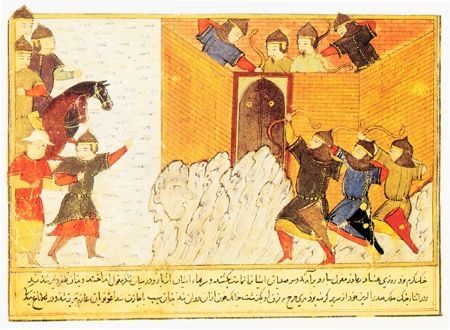
(Baghdad) Cochin, too, gathers worlds. In the blue tiles of the Paradesi Synagogue , in the slow lift of the fishing nets, in the quiet persistence of old streets—there is no single history, only layers. He wrote before the great erasures of the Mongol invasions .
I walk among their aftermath. (chinese fishing nets brought to Cochin by the great chinese admiral, ZhengHe, 14th century) (with the priest from the kunan kurissu church near jew town in cochin, kerala, india. Fr Benjamin) And so our journeys meet—not in time, but in intention.
He gathered the world so it might endure. I pass through it, trying, however imperfectly, to notice what remains. (jewtown, jew street, cochin, kerala, india ) (spice store) Épigraphe « Je ne suis rien.
Je ne serai jamais rien. Je ne peux vouloir être rien. À part cela, je porte en moi tous les rêves du monde.
» — Fernando Pessoa Il n’était pas destiné à appartenir au monde qu’il décrivait. Yaqut al-Hamawi , arraché aux marges byzantines, entra dans le monde abbasside non comme savant mais comme possession. Pourtant, par la discipline silencieuse de la langue, en copiant des textes et en parcourant les routes avec une attention patiente, il devint plus qu’un natif—il devint un témoin.
En marchant à Cochin, j’avais l’impression de suivre les contours de ses phrases inachevées. Le port s’ouvrait sur la mer d’Arabie comme autrefois—des navires chargés d’épices, de manuscrits et de langues. Il aurait écouté attentivement : les noms des ports lointains, la mémoire portée par le commerce, les détails que d’autres négligent.
Yaqut ne voyageait ni pour conquérir ni pour s’émerveiller. Il voyageait pour préserver. Son Mu’jam al-Buldan est moins une géographie qu’un acte de mémoire—des villes décrites avant leur disparition, des noms sauvés de l’oubli.
Cochin aussi rassemble des mondes. Dans les carreaux bleus de la Paradesi Synagogue , dans le lent mouvement des filets de pêche, dans la persistance des vieilles rues—il n’existe pas une seule histoire, mais des strates. Il écrivait avant les grandes effacements des Mongol invasions .
Moi, je marche parmi leurs traces. Ainsi nos voyages se rejoignent—non dans le temps, mais dans l’intention. Il recueillait le monde pour qu’il dure.
Je le traverse, tentant, imparfaitement, de remarquer ce qui subsiste. Epígrafe « No soy nada. No puedo querer ser nada.
Aparte de eso, llevo en mí todos los sueños del mundo. » — Fernando Pessoa No estaba destinado a pertenecer al mundo que describía. Yaqut al-Hamawi , arrancado de los márgenes bizantinos, entró en el mundo abasí no como sabio sino como posesión.
Sin embargo, mediante la disciplina silenciosa del lenguaje, copiando textos y recorriendo caminos con atención paciente, llegó a ser algo más que un nativo—se convirtió en testigo. Al caminar por Cochin, sentí que avanzaba por los bordes de sus frases inconclusas. El puerto se abría al mar Arábigo como en su tiempo—barcos cargados de especias, manuscritos y lenguas.
Él habría escuchado con atención: los nombres de puertos lejanos, la memoria contenida en el comercio, los detalles que otros pasan por alto.
Original Blogger URL: https://medicoanthropologist.blogspot.com/2026/04/yaqut-al-hamawi-greatest-arab-traveller.html