A Day of Healing at a Clinic for Native Americans Barely thirty, JWE, now sits in front of you, a wasted life, his limbs a metaphor for that waste. Bites from bed bugs all over. He requests calamine lotion.
R foot disabled by Charcot. Painful to move, dislocation of the bones of the ankle joint I suppose. I was determined that he is seen regularly by us.
The Podiatry Nurse had picked him at his home and bought him over to the clinic ( Point 1). Basing our concern on the friendship we have with this nice man, sit and chat with him. He produces two prescriptions from a cardiologist from City: Atenelol ER 25 mg , one half to be taken each day.
The Diabetes educator tried to break the tiny tablet into two, was unable to ( Pont 2). The Pharmacy agreed to break the tablets into two for this young man suffering with neuropathy and general muscular weakness. The Podiatrist attends to his feet, he needs operative correction and she makes the necessary arrangements for them to be done at Sioux City.
I ask him for his telephone number, I have two cellular phones, he says proudly, I shall call you on both phones at the same time to remind you to come and see us next month. He has been prescribed 35 units of NPH (a longer acting Insulin ) in the morning and in the evening and 20 units of Humalog (a quick acting insulin) before Lunch and dinner. Whoever prescribed that did not have any idea of his eating habits.
He, likes many Indians has hardly any breakfast, so the Insulin in the morning makes him feel weak by mid morning, he has to grab whatever he has, usually something undesirable, to make him feel better. Lunch is a small affair and if he takes the Humalog he feels drowsy all afternoon. The evening meal is a substantial one and he takes his insulin before dinner and the fast acting one after dinner.
Occasionally he wakes up feeling weak . Cut down on his Insulin in the morning, Omit the pre lunch Insulin if he is having a small lunch and ask him to take his Insulin before dinner. A commonly made error is the incongruity between Insulin dosage and the requirements of the individual body, in this case a man who does not eat breakfast or very little at lunch.
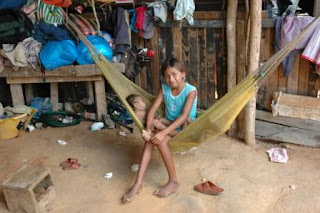
Bug Bites may not be a medical emergency but it is a social one. Calamine lotion is not the treatment for the situation, first soap to clean the skin , and look into the housing situation, where does he sleep, how can we find out the status of the bedding he sleeps on, how can we help. (Point 3) Point 1 Just because the Nurse thought of picking him up, he was able to have his foot cared for.
There are people out there whom we can help. But how can we help if they don’t have access to us? Point 2 How many of us know the shapes and colours of the prescription medications we write for and ask patients to do superhuman feats that we ourselves cannot do.
Just because he is a patient it does not mean he does not have any human rights. This first patient of the day, was an example of Human Rights Violation at the level of Health and at the same time an example how social care can augment the outcome of a poor patient. Point 3 Knowing fully the personal habits and hygiene of the place of residence is extremely important.
As carers of human beings, we must make sure that we are not adding to the already present social structural violence in their lives. Patient 2 Age 43 Type 2 Diabetes since age 35. Why do you think you got Diabetes?
It cannot be hereditary, since my mother who is in her late sixties was just diagnosed with diabetes and I have had diabetes now for eight years. I am convinced that it is the food that made me diabetic. I was eating everything and anything and paid no attention at all to the quality of food.
Now going on for eight years with Type 2 Diabetes, controlled with one oral hypoglycemia agent.. Eventhough he works in the clinic area, he has not been seen by any provider for more than one year. Doctors tend to forget that patients also have their view of the world and explanations of why they get ill.
It is one of the fundamental themes of cross cultural medicine, that patients from various cultures, even from the same country, such as USA, have different explanations on why they get sick. If you are unwilling to accept and negotiate through the model (called Explanatory Model in Anthropology), you would become less effective, you are not out there to demonstrate your pathophysiological knowledge, you are out there to take care of the patient and relieve him of his illness and suffering. You are not at war with your patient, and don’t try to assert your superiority ( a complex) by insisting that only your explanatory model, the western medical model based on body as a machine metaphor).
If the patient believes that his hyperglycemia was caused by food he was eating, and you don’t believe him; and you make that clear in your action or words or facial expressioins, he also has very little interest in believeing your pathophysiological explanations of insulin resistance or insulin secretion. We are not here to prove who is right and who is wrong, but try to find way s communicating with the person sitting in front of you and alleviate his symptoms Curers, which of most of the health care providers are, want certainty; healers want relief of suffering. This is not about doctor patient relationship, that is very much dependent upon the personality of the provider.
As my UmonHon teacher once told me: you cannot make a good doctor out of a bad person. Patient No 3 If you work with Indians long enough, you begin to understand the importance of symbolism in their lives. As one Lakota Elder remarked: we live in a world of symboiism, we only need a hint to understand.
Original Blogger URL: https://medicoanthropologist.blogspot.com/2008/01/day-of-haling-at-native-american-indian.html